Thursday, March 7, 2013

Review: Seraphina

Seraphina
By Rachel Hartman
Random House 2012
451 pages
From the library 

Seraphina (Seraphina, #1)

Seraphina Dombegh is a court musician in the kingdom of Goredd. The land has been at peace for years, ever since a tentative peace was brokered between humans and dragons. As the anniversary of the treaty draws close, dragons begin to arrive to the court in human form to attend the celebration. When a member of the royal family is murdered, seemingly by a dragon, no one at court is above suspicion. Seraphina has a secret reason for wanting this mystery solved and begins assisting Prince Lucian in the investigation. Will her involvement in this court catastrophe reveal her own hidden origins?

As you know if you often read this blog, I approach YA novels with a certain amount of trepidation. But I'm trying to move past that. When I heard that this story was set in a fictional past and that its heroine is a musician, I thought this might be one I could get into. As it turned out, I really enjoyed this book. 

Seraphina is slated to have a sequel published next year and I think Hartman has created a world and a group of characters who are deserving of multiple books. While this is an imagined world with imaginary conflicts between dragons and people, there are obviously a lot of parallels to be drawn about those who have power and a sense of belonging and those who are on the outside. In Seraphina's world, dragons are outcasts who are forced to wear bells around the neck when in human form so that everyone can avoid them. Despite their great power, they are the lowest members of society. 

Seraphina herself is a really compelling character. She is guarded with other people because she doesn't know who she can trust, but she is also incredibly resilient and layered. While I liked her a lot, she often struck me as very mature for her age. We are told she is 16, but she thinks and acts much older than that. She has a great deal of responsibility, as someone who is responsible for instructing musicians and organizing music for the entire kingdom. She also has a firmly established sense of morality for a teenager and has the ability to really empathize with others and consider their feelings and reactions. It's a wonderful change from the typical self-centered teenage heroine.

I also really appreciated the romantic aspect of this story. It's easy to tell, fairly early in the story, that Seraphina will begin a romance of some sort with a certain character. But it's not the crux of the book. It's a slow build and the story is more about Seraphina coming to terms with who she is and how she navigates her world than about her feelings for the other character. Seraphina's experiences could stand without a love interest, but having one certainly adds some tension to the story.

Rachel Hartman's Seraphina is a perfect book for immersing yourself in another world. It's a fantasy world with rich characters and a fast-moving story and a YA book with a protagonist who cares more about self-awareness and the world around her than the cute boy next door. I am glad that I gave this book a try and I look forward to seeing what happens in the sequel. 

Tuesday, March 5, 2013

February Wrap-Up

Adios, February! I think the few bizarre warm days we have had are making me excited for spring. I feel done with winter and ready for some sunshine and flowers. As for reading, I feel like I have been going back and forth between books I speed through in a day or two and books that seem to take forever to finish. But I feel like I am reading quite a bit, so all is well. 

Books reviewed in February: 9
Pages Read: 3,307
Fiction/Non-fiction: 8/1
Female authors/male authors: 6/3
My books/library books: 5/4
Lindsey's favorite books in February: Year of Wonders and Lost in a Good Book 

Books reviewed with David: 3
David's favorite book in February: Pippi Longstocking


What was your favorite read in February?


Literary Lindsey, David, and three sisters/aunts

Sunday, March 3, 2013

It's Monday and it's already March!


So what happened this week? Nothing too exciting - work and chores and a doctor's appointment. It was a good reading week, though. I'm still behind on my Goodreads goal, but I'm trying not to worry too much about it since it's only March. Do you have a Goodreads goal? How are you doing?


Read This Week:

Catch-22
Catch-22
By Joseph Heller


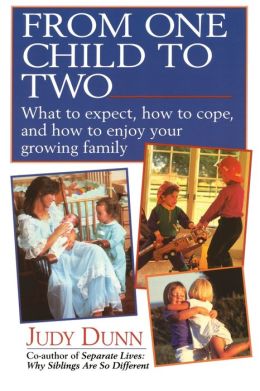
From One Child to Two:
What to Expect, How to Cope, and How to Enjoy Your Growing Family
By Judy Dunn

The Red Garden
The Red Garden
By Alice Hoffman

Posts from this Past Week:
It's Monday
Wednesdays with David: Pippi Longstocking 
Reviews of Iscariot, 20 under 40: Stories from the New Yorker, and Catch-22


Reading Now:
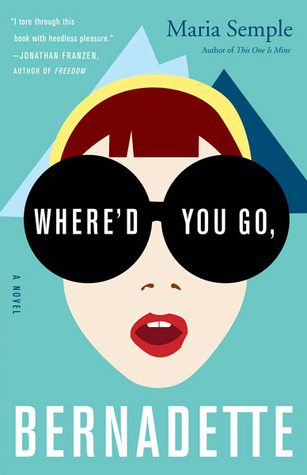
Where'd You Go, Bernadette
By Maria Semple

Up Next:
The Happiness Project: Or, Why I Spent a Year Trying to Sing in the Morning, Clean My Closets, Fight Right, Read Aristotle, and Generally Have More Fun
The Happiness Project:
Or, Why I Spent a Year Trying to Sing in the Morning, Clean my Closets,
Fight Right, Read Aristotle, and Generally Have More Fun
By Gretchen Rubin

What are you reading this week?

Friday, March 1, 2013

Review: Catch-22

Catch-22
By Joseph Heller
Dell Publishing 1978
463 pages 
Borrowed from my Dad

Catch-22

Well....this book...it's a doozy. 

I completely understand why so many people abandon this particular novel. It can be downright confusing - we are constantly introduced to new characters who are then abandoned for several chapters and it often seems more like a series of vignettes than a coherent story. There is humor throughout, but it's not a laugh-out-loud sort of humor. Rather, it's consistent absurdity.

At its simplest level, this book is about a bombardier during WWII named Yossarian. He has flown his quota of missions and is ready to go home. But his commander keeps increasing the number of missions, so Yossarian must come up with new and inventive ways to avoid being sent out. He and his friends are stymied by Catch-22: In order for a pilot to be relieved from duty, he must be insane. But the pilot who asks to be released understands that flying so many missions is tantamount to suicide and so he is not insane. 

In spite of almost 500 pages of tangents, ridiculousness, and death...I found myself enjoying this book. Heller has some sort of magic that makes you feel like you can't connect to any of the characters until the sudden moment when you find your heart broken because another pilot has died. The complete dissonance between the hilarity of redundant orders and misunderstandings and the pain and agony of war is incredibly written and hits the characters and the readers at the strangest of moments. This is one of those books you sort of hate while you read it, but feel a great sense of accomplishment when you finish it. 

This is a very strange book. It's hard to read, but unexpectedly worthwhile when you finish it. If you are trying to read this book and tempted to set it aside, stick with it. Under all of the absurdity is a truly tragic story of men who die and men who live, all without being quite sure what it is they are fighting for. After all, isn't war the most absurd thing of all? 

Thursday, February 28, 2013

Review: 20 Under 40: Stories from the New Yorker

20 Under 40: Stories from the New Yorker
Edited by Deborah Treisman
Farrar, Straus and Giroux 2010
431 pages
From my shelves

20 Under 40: Stories from The New Yorker

It would be impossible to give appropriate attention to each of the stories included in this collection. So instead of attempting the impossible, I'm going to recap a few of my favorite stories and my thoughts about the book as a whole.

Birdsong by Chimamanda Ngozi Adichie presents a realistic and sympathetic picture of a young woman who never imagined she would become someone's mistress. As she notices a woman watching her at a stoplight, she fears it is the wife of her lover and thinks back on their relationship. Adichie has created a very relatable character - she reacts badly to being taken to secluded restaurants and to the way the driver snubs her. Her protagonist and her writing style are lovably prickly. We know that the relationship can only end badly, but she can't stay away from him and we can't stop reading about it.

There is a piece of Nell Freudberger's popular novel The Newlyweds that I found very well-written. I will be looking for the rest of the story. Amina meets an American man online and eventually moves to the US to become his wife. The dissonance between Amina's upbringing, where she is largely ignored or belittled by her family, and her new relationship with her husband is striking. I finished the piece wanting to learn more about Amina and George's new and unexpected relationship.

Dinaw Mengestu's An Honest Exit has much to do with the idea of storytelling. After our narrator misses class because of his father's death, he finds himself telling his students about his dad. He relates how his father escaped from the political strife of Ethopia to Sudan and eventually to London. In the telling (or re-imagining) of his father's story, he finds a sort of closure with the father he never felt he really knew.

As I read over the list of authors featured here, it was interesting to note how many of them have had popular and/or critically acclaimed books published within the past few years. Writers in this collection include Tea Obreht, Nicole Krauss, Karen Russell, and Jonathan Safran Foer. It was also fun to see that a few of the short stories became pieces of those very novels. I recognized Krauss' selection because I  read and enjoyed her novel Great House. 


Short story anthologies are intriguing to us because we hope to find new beloved authors. However, the problem becomes the sheer number of stories in a book. It's difficult to remember which story or author you really liked when you are twelve stories into the anthology.
Do you like reading short story anthologies?
Do you have a specific method for keeping track of which authors you admired?
Which authors have you discovered through short story collections? 

Wednesday, February 27, 2013

Wednesdays with David: Pippi Longstocking

Pippi Longstocking
By Astrid Lindgren
Puffin 1945
From the library 


The story: Pippi is a little girl who lives all alone in a big house - well, not alone: she has no mother and her father is the king of a far-away cannibal tribe but she does have a beloved horse and monkey. When two neighboring children  meet her, shenanigans ensue as Pippi tries out school for the first time, dodges some policemen, and celebrates her birthday.

Mama opines: Well, this is a first for us. We got this book from the library and read the first few chapters. That night, David asked to take it up to bed with him and I said yes. The next day, I asked if he wanted to read a few chapters. He told me no - he finished it the night before!
I'm still getting used to having a reader...I was a bit sad he finished it without me because I've forgotten how the book ends!
This book is a lot of fun. Pippi and her friend get into a lot of trouble, but there is a serious lack of respect for rule and authority. You have to gauge if your child is the type to retort that they don't have to follow the rules because Pippi doesn't and that they are going to go live without a mommy or daddy too....If that's the case, you might want to skip this one.

Thoughts from David: I like it because Pippi Longstockings lives without any daddy or mommy and she tricks two policemen! Then she climbs a tree to trick the policemen again.
Favorite part: When Pippi climbs the tree.

Happy Reading! 

Tuesday, February 26, 2013

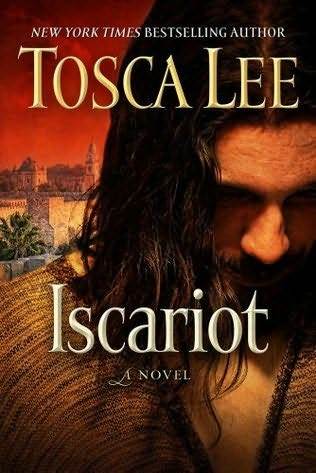
Review: Iscariot

Iscariot
By Tosca Lee
Howard Books February 2013
320 pages
Received for review

Iscariot

When we read through the Bible, there is one person who is more reviled than any other. We have a hard time wrapping our minds around a man who could travel for years with Jesus as his friend and disciple and then betray him for thirty pieces of silver. It's easy for us to forget that Judas Iscariot was a person, just as we are, with strengths and weaknesses, triumphs and failings. Tosca Lee has not forgotten this and in her latest novel Iscariot, she gives us a compelling picture of what the story of Judas could have been.

We first encounter Judas at the end of his life, where he is thinking back over his life and trying to determine how he has ended up here. From there, we are taken back to his childhood. Judas is a man whose heart has been broken many times over. He has lost his father, his brother, and his wife to Roman violence and is looking for a leader who will bring justice and peace to his land. He initially approaches both John the Baptist and Jesus himself to find out if they will join his group of zealots in reclaiming their homeland. But Jesus is so different from what Judas expected that he can't help but follow him.

Lee accomplishes two difficult things in this novel. First, her research is an effortless part of the story. She writes in the author's note that the book was originally twice as long and extremely research heavy. In revising the book, she cut out a lot of the facts and focused on the character of Judas. But we really experience the uncertainty of living during this time period for the Jewish people and the complicated hierarchy of Jewish tradition.

The second thing Lee achieves is making one of the most hated men in all of history interesting and even likable. It's easy to think of Judas as someone who is evil and conniving from the beginning. It's much more challenging to think of him as a man who truly loved Jesus and considered him his best friend and teacher. As events progress, Judas is faced with a dilemma. He can't see a way in which things end well for Jesus, for the other followers, or for himself. In Ms. Lee's version, Judas makes what he views as the best of some very bad options. That choice spins wildly out of control with consequences that Judas never foresaw. While I don't know that I buy the sequence of events, I can't deny that reading this book made me dramatically rethink the way I perceive Judas.

This would be a really great book to read right now during Lent as many of us are thinking about the last days of Christ. You know that a book is well-written when you know how it will end, but can't help but read a few more pages. Tosca Lee has written a very engaging book that will make readers reconsider the way they see Jesus and the way that they think of the man who has come to represent the very worst of humanity.


To the guys and gals of the FTC: I received this book from The DeMoss Group in exchange for an honest review. Thank you, Adrienne!