Showing posts with label F. Scott Fitzgerald. Show all posts

Tuesday, March 10, 2015

Review: West of Sunset

West of Sunset
By Stewart O'Nan
Viking January 2015
304 pages
From the library
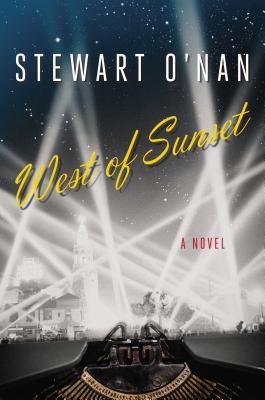
West of Sunset


In the late 1930s, F. Scott Fitzgerald found himself at a dead end. His beloved wife Zelda had been institutionalized and his once thriving literary career seemed to be at a standstill. In a desperate effort to bring in some money, he becomes a screenwriter for MGM. The glamour of Hollywood is a stark contrast to Fitzgerald's life as he fights between his feelings for gossip columnist Sheila Graham and devotion to his wife and is defeated time and time again by illness and alcoholism. In West of Sunset, Stewart O'Nan takes readers into the last three difficult years of Fitzgerald's life.

F. Scott Fitzgerald is one of my favorite authors ever and Stewart O'Nan is a contemporary author I greatly admire. When I read that O'Nan was writing historical fiction about Fitzgerald, it seemed as if I was being granted a literary gift. 

It is obvious that O'Nan has done a lot of research for this book. Fitzgerald's last years were not easy for him or for those around him. Although the lights of Hollywood grace the book's cover and were inescapable for Fitzgerald himself, this book is very dark. Our hero is a broken man who sees himself as a failure in his work. He can't support his family the way he would like to, he loves Sheila but berates himself for betraying his wife, and he can't overcome his demons. This story doesn't grab you from the offset, but instead pulls you deep into the depression that Scott is experiencing page by page, day by day. 

Fitzgerald expected the work in Hollywood to be easy and he is dismayed when his ideas are cast aside, the studio heads pass the projects on to other writers, and his credit is claimed by others. In those last years of his life, he also worked on a Hollywood-based book - The Last Tycoon. Sadly, Fitzgerald never had the chance to complete it. 

It is difficult for us as readers to make this version of Fitzgerald fit with the famous, carefree F. Scott who famously jumped into fountains with his wife and was the life of the party. But darkness is a common thread through his work and was a constant presence in the lives of Scott and Zelda, threatening them with poverty, insanity, and dying without being appreciated as a writer. Stewart O'Nan has carefully captured one of our most beloved writers in his most difficult moments. 

Friday, February 6, 2015

What To Read After The Great Gatsby

So you had to read The Great Gatsby for your high school English class or your Intro to the Novel course at college. Maybe you picked it up after watching Leonardo DiCaprio in the movie. And it turns out that you sort of liked it. Maybe you really liked it. But now you're not sure what to read next. F. Scott Fitzgerald is one of those big famous authors and it's tough to know where to start.

Not to worry, this F. Scott fan has got you covered!


Looking to read another Fitzgerald novel?

   Tender is the Night

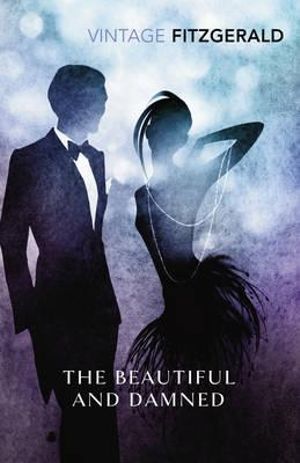
The Beautiful and Damned tells the story of Anthony and Gloria Patch, who sound quite a bit like Fitzgerald and his wife Zelda. When I reviewed it, I wrote "Although this book is almost a century old, it feels incredibly timely. Here is a novel about young love, about the tenuous line between riches and poverty, about a young man who graduates from college, can’t decide what to do with his life, and then can’t find a job. Fitzgerald’s brilliance is that it resonated with his peers – those of old money whose world was changing rapidly – and it resonates with the current generation that is watching their dreams fall aside to the economic and social realities of our day."

Tender Is the Night is a sad and beautiful book about a marriage that is falling apart. Its characters love each other while hurting each other and try to solve problems caused by money and glamour by turning to those very things.


Looking to read a different kind of work?
  A Short Autobiography

Fitzgerald wrote many short stories to pay the bills as he worked on his novels. His stories were published in Esquire, the Saturday Evening Post, and Collier's Weekly. Flappers and Philosophers is his first story collection and includes favorites such as "The Ice Palace" and "Bernice Bobs Her Hair."

Although a lot of Fitzgerald's fiction was based on real people and events, he did write a good amount of true nonfiction as well. A Short Autobiography is actually a collection of articles he wrote, ranging from sarcastic advice about how to live on a budget to a reflection on the life of his father.


Looking to find out more about the man himself?

Some Sort of Epic Grandeur: The Life of F. Scott Fitzgerald  Dear Scott, Dearest Zelda: The Love Letters of F. Scott and Zelda Fitzgerald

Matthew J. Bruccoli is one of the preeminent scholars of Fitzgerald's life and work. His biography Some Sort of Epic Grandeur is the place to start for F Scott fans looking to increase their knowledge.

Reading correspondence is a great way to understand how writers wrote at their most uninhibited. Dear Scott, Dearest Zelda is a collection of letters between the husband and wife, spanning their relationship.


Looking to read some of his contemporaries?
   The Age of Innocence

Hemingway and Fitzgerald were great friends and occasionally enemies, who challenged and criticized each other's lives and work. In contrast to Fitzgerald's detailed prose, Hemingway's writing is stark but still powerful. A Farewell to Arms is based on Hemingway's time working for an ambulance service during WWI and is both a tale of war and a sweeping love story.

Wharton's Pulitzer Prize winning novel is about wealth and reputation, duty and love. I haven't read The Age of Innocence yet, but it is on my classics club list!


Looking to find out why The Great Gatsby endures?

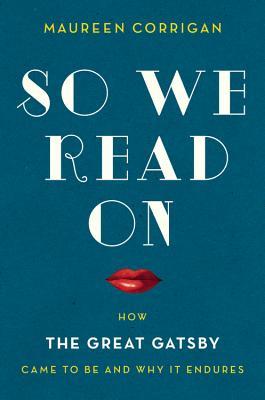
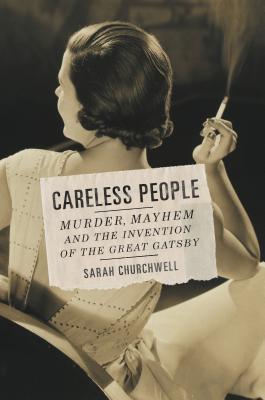
So We Read On: How The Great Gatsby Came to Be and Why It Endures  Careless People: Murder, Mayhem, and the Invention of The Great Gatsby
I recently read So We Read On and found it a really fascinating and thoughtful examination of why Gatsby continues to capture the imagination and love of readers. Her close reading is accessible to anyone but also interesting for even the most devoted of fans.

The author of Careless People engages in a bit of hypothetical journalism. She compares Fitzgerald's notes about Gatsby with events happening at the time and attempts to uncover whether he may have been influenced by them. It's great for readers who love the novel and those looking to get a better sense of the time period.

Friday, July 27, 2012

Review: The Great Gatsby

The Great Gatsby
By F. Scott Fitzgerald
Scribner 1995
205 pages
My personal and much beloved copy

The Great Gatsby


This is the third time I've read The Great Gatsby. The first time was in my junior year of high school in my English class, like many other people. I bought my own copy and read it again during college. Now, in my mid-twenties, I’m reading it as a part of my effort to read one of Fitzgerald’s novels or short story collections each month.  Gatsby is a pivotal novel for so many readers, the book that convinces people that books that are considered ‘classics’ or ‘literature’ can be accessible for everyone. I’m struck by feeling as if I could write about this book for hours and wondering if I can add anything to the conversation that hasn't already been said in the past 87 years.

As I read the novel this time around, I was struck by how sparse this story is and how much it says in less than 200 pages. The story at its core is a simple one: a man works for years to get the girl he loves, but his quest ends in tragedy. But Fitzgerald weaves a relatively simple story, one that has been in our collective psyche forever, and makes it so much more. He explores the American Dream, what it means to be wealthy, the distinction between being loved and being idealized, and the extent to which we can ever really know another person. All of this is done to the tune of some of the most beautiful language in the American literary cannon.

“Through all he said, even through his appalling sentimentality, I was reminded of something – an elusive rhythm, a fragment of lost words, that I had heard somewhere a long time ago. For a moment a phrase tried to take shape in my mouth and my lips parted like a dumb man’s, as though there was more struggling upon them than a wisp of startled air. But they made no sound and what I had almost remembered was uncommunicable forever.”

What struck me most this time around was how beautifully Fitzgerald writes about making our dreams bigger than they can possibly be. Gatsby is a man with a clear goal: marrying Daisy. In order to do this, he works (through honest means and suspicious ones) to become wealthy enough to take care of the woman he loves in the manner in which she expects. From first glance, this seems like an admirable goal. But the lesson in this novel, I think, is to not have just one dream. Gatsby has nothing else in his life – no family, no friends, no goals with the exception of a happy ever after with Daisy. Over the years, he has made her into a woman so amazing that no mere mortal can live up to the woman he has been dreaming about for so long.

There is a sense, throughout this book, of distance between the characters. Some of it is physical – Daisy and Gatsby have been apart for a long time. Some of it is mental and emotional. In spite of the fact that Daisy and Tom are married, there are definite walls between them and each has given their heart to another. I think Fitzgerald intentionally emphasizes this distance by narrating the story through the eyes of Nick Carraway. He is new to the area and does not even know who Gatsby is until they are awkwardly introduced at one of Gatsby’s lavish parties. As Nick begins spending time with these people, he tries to get to know them. But he finds it harder than he expected. Gatsby in particular is seemingly unknowable, as rumors about him seemingly contradict each other and the man in question does not jump to clear up the mystery.

The Great Gatsby is a book that you can return to time and again, one of those stories that will mean something different to you at different points in your life. If you haven’t read it yet, now is always the right time. F. Scott Fitzgerald had a great gift for mixing deep character insight with themes that still resound with the modern reader and prose that might as well be poetry. There are many very good reasons that The Great Gatsby is an enduring classic.

Thursday, June 21, 2012

Review: The Cruise of the Rolling Junk

The Cruise of the Rolling Junk
By F. Scott Fitzgerald
Hesperus Press November 2011
92 pages
A birthday gift


Well, ladies and gentlemen, I am doing an abysmal job of reading and reviewing something by F. Scott each month. My last post on Francis is from March and I am appropriately ashamed. So today we will look at The Cruise of the Rolling Junk and soon we will look at Tales of the Jazz Age, a collection of short stories. Next month, I will be (re) reading The Great Gatsby. I would love for you to join me!


The Cruise of the Rolling Junk is a recent release of Fitzgerald's articles detailing the adventure that he and his wife Zelda had on the way to visit her parents. The duo set out from Connecticut to drive to Zelda's childhood home in Alabama in a car they dubbed 'the rolling junk.' 

Shortly after the publication of The Beautiful and the Damned, Fitzgerald wrote  about their trip with the hope of making some quick money from a major magazine. Unfortunately, the only magazine that would accept his travelogue was Motor magazine. For a few hundred dollars, Fitzgerald's account appeared in three installments in 1924.

Although this is a very quick read, I found it incredibly indicative of Fitzgerald's style as a writer. While this purports to be a true retelling of their trip, we know that there are several key issues which are misrepresented, or lied about. This is the fascinating thing about this writer, though. His fiction has many shades of truth and his supposed non-fiction has the flair for the dramatic which inspires Fitzgerald to make their story better (even if it is untrue). 

There are also many things the reader can take from this slim book about  Fitzgerald as a person. We get an intimate look at the relationship of F. Scott and Zelda - the way they fought, the way they constantly tried to triumph over the other in wit or humor, and the way alcohol and money figured heavily into their ups and downs as a couple.

Through the eyes of our intrepid travelers, we view a country that is still healing from war and is riddled with racism. Zelda is deeply grieved by the ways her beloved South has changed since she was a young girl living there and enjoying 'peaches and biscuits.' F. Scott is incredibly uncomfortable when he has to stop in a black town in order to get some gas and wishes he had purchased a gun. While such overt racism is difficult to stomach today, our author is certainly not alone in his feelings in the 1920s. 

There is a comedy of errors feel throughout this book - the ways in which the car breaks down, the irresponsible spending of money, the finding of more money, and the final stroke of bad fortune (spoiler!) when it is revealed that Zelda's parents are not at home to receive them! It is fun to read, but what makes it excellent is that the humor is only thinly obscuring the real issues for both the Fitzgeralds and the country at large.

If you are a newbie to the writing of F. Scott Fitzgerald, this is a great way to dip your toe into the waters in less than 100 pages. If you are a lover of his remarkable stories, you will want to add this one to your shelf as perhaps the last piece of newly released writing we will ever have from a very talented writer.


Tuesday, February 28, 2012

Review: Flappers and Philosophers

Flappers and Philosophers
By F. Scott Fitzgerald
256 pages


Man, I thought I was the best F. Scott fan. I have this big beautiful collection of F. Scott stories and I thought that it included all of the stories. But then I went and cross-referenced the stories in Flappers and Philosophers with my book. It only had half of them! Thank goodness for Project Gutenberg. 


This collection includes eight stories and is Fitzgerald's first published story collection. Many of the stories had previously appeared in the New York Post. The most popular from this collection are The Offshore Pirate, The Ice Palace, and Bernice Bobs Her Hair. Interestingly enough, many of these stories are told from the point of view of women in stark contrast with the male protagonists of Fitzgerald's novels. He is widely credited with bringing the flapper character to prominence.

I enjoyed all of these stories. Fitzgerald writes a wide range of characters and themes. His stories range from  a young man whose turn to crime has interesting repercussions to a young woman whose yacht is boarded by pirates. They are the perfect length - nothing has been neglected, but I never felt like I had been reading a story for too long. 

My favorite of the bunch was Head and Shoulders. Horace Tarbox is a student at Yale, aloof and focused on his studies. When his friend sends a girl to his rooms as a prank, he finds that he can't stop thinking about her. Marcia continues to work as a showgirl while Horace hopes to move up in the export company where he is employed. "Horace, who had no habits whatsoever - he had never had time to form any - proved the most adaptable of husbands, and as Marcia entirely lacked opinions on the subjects that engrossed him there were very few joltings and bumpings. Their minds moved in different spheres. Marcia acted as practical factotum, and Horace lived either in his old world of abstract ideas or in a sort of triumphantly earthy worship and adoration of his wife." The evolution of their relationship and the roles that they play within it are fascinating to witness. 

Flappers and Philosophers is an excellent short story collection from a writer who was in the early years of his career. It's a treat for fans of Fitzgerald's novels and a good starting point for those who have not yet read his brilliant prose. 


In March, I'll be reading The Beautiful and The Damned. Join me? 

Tuesday, January 31, 2012

Review: This Side of Paradise

This Side of Paradise
By F. Scott Fitzgerald
Simon and Schuster 1920
260 pages
From the library


This Side of Paradise is the first published piece of writing by F. Scott Fitzgerald. Fitzgerald was in such a hurry to get something published before he left for the war that he literally combined several pieces of writing he had already completed. And of course Fitzgerald wasn’t stymied by issues like difference in genre. He just slapped together part of a play, some short stories, several poems, and random ruminations. It is a great testimony to his writing that somehow, with lots of loving prodding from his editors, it works.

This Side of Paradise is the story of Amory Blaine. Amory is born into privilege and an unusual relationship with his mother Beatrice. The reader follows him through his childhood, his years at prep school and college, his time at war (briefly), and his inevitable arrival at adulthood. Amory is a thinly veiled representation of Fitzgerald himself, complete with a Princeton education.

Amory…well, he is kind of a jerk. He is handsome and smart and he knows it. But he does go through change during the novel. I can see how many people compare him to the infamous Holden Caulfield. However, I hate Holden and I like Amory. Holden is stuck-up and whiny. Amory is just stuck-up. And he is more interesting!

The writing has this dreamlike quality that is classic Fitzgerald brilliance. When you are sleeping deeply, you have to find out what is going to happen next in your dream but there is a little bit of foggy distance. Reading this book was like enjoying a good dream. There are also beautiful moments of insight about love, relationships, and growing up.

This is certainly not a perfect novel. Since I will be reading the F Scott canon this year, I expect to see his skill as a writer increase as he continues to write. There are several spots in this book where I found myself wondering what was going on. I love ellipses as much as the next writer, maybe more, but Fitzgerald gets downright abusive with them. The ending is really bizarre as well. {SPOILER!} After all we have been through with Amory, we are left with no idea of what he will be doing next. We leave him back at Princeton after a car ride with two strangers in which Amory pontificates about socialism.

However, the novel does end with a brilliant quote - “I know myself, but that is all –“. This is indicative of everything that happens in this novel. Amory begins life defined by his mother, then by his education, then by his friends and lovers. By the end of the novel, he is completely alone in the world. He has deserted the philosophies and authors who helped him through his earlier years. Amory only has himself to see him through whatever the future brings. 


Some favorite quotes:

“Amory wondered how people could fail to notice that he was a boy marked for glory, and when faces of the throng turned towards him and ambiguous eyes stared into his, he assumed the most romantic of expressions and walked on the air cushions that lie on the asphalts of fourteen.”

“It was always the becoming he dreamed of, never the being. This too was quite characteristic of Amory.”

“Yes,” he agreed, “you’re right. I wouldn’t have liked it. Still it’s hard to be made a cynic at twenty.”
“I was born one,” Amory murmured. “I’m a cynical idealist –“ He paused and wondered if that meant anything.”

“Well,” said Amory, “I simply state that I’m a product of a versatile mind in a restless generation – with every reason to throw my mind and pen in with the radicals. Even if, deep in my heart, I thought we were all blind atoms in a world as limited as a stroke of a pendulum, I and my sort would struggle against tradition; try, at least, to displace old cants with new ones. I’ve thought I was right about life at various times, but faith is difficult. One thing I know. If living isn’t a seeking for the grail it may be a damned amusing game.”


Did you read This Side of Paradise this month? If you did, leave me a comment and  a link to your review. If a lot of people join in, I will see about putting up a Linky for next month. I've never done it before, but for F. Scott I would try!
In February, I will be reading Flappers and Philosophers, which is a short story collection. If, like me, you have the giant book of F Scott Fitzgerald short stories, click here to see which ones are up for this month. Please join me!