Showing posts with label memoir. Show all posts

Thursday, January 20, 2022

Mini Reviews: Stranger Care and Our Lady of Perpetual Hunger

Sarah and Eric Sentilles make the decision not to have a biological child. Instead, they go through the long and intense process of becoming foster parents. They are thrilled to finally get a call about fostering a baby girl named Coco. The couple welcomes her into their home and makes her a part of their family. And so begins the painful process of getting to know and love a child who was, as Sarah points out, "never ours, yet we belong to each other." 

Stranger Care is a difficult, but important, read. Sentilles is honest about the roller coaster of emotions that she experienced as she came to love this child while also knowing that Coco would likely be reunified with her family. Is it possible to love a child and prepare to let them go at the same time? Sarah and Eric bond with Coco's mother Evelyn and cheer her on as she tries to overcome a drug addiction and find a steady job. In other moments, they quietly hope that Evelyn will fail so they can keep the little girl who has captured their hearts. Stranger Care is an unflinching look at the complications of our foster care system, the lack of staff and resources to care for these children, and the uneasy compromises that biological and foster parents make as they try to do what is best for a child they love. 

Stranger Care
A Memoir of Loving What Isn't Ours
By Sarah Sentilles 
Random House May 2021
400 pages
Read via Netgalley 
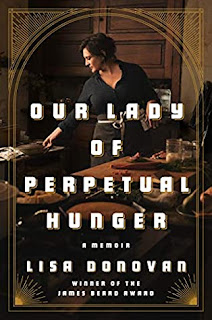


Lisa Donovan went from waiting tables in a small-town Italian restaurant to working as a pastry chef with some of the most influential American chefs. Her journey there was not an easy one--she finds herself unexpectedly pregnant, leaves an abusive boyfriend, and works in kitchens that won't pay her fairly and would rather not have women there at all. Our Lady of Perpetual Hunger is the story of Donovan's realization that professional kitchens are often toxic and unsustainable, and her decision to strike out on her own and find a way to be recognized (and make a living) making good food with good people. 

Donovan is a particular kind of narrator--she's angry and belligerent. And she should be; she has faced incredible challenges in her professional and personal life. Perhaps because the experiences were so difficult, Donovan jumps all over the timeline and often spends more time ruminating about her trauma and pulling herself up to the next thing than actually remembering her time baking. This book is a little bit baking memoir, a lot of angry feminist realization, and a whole lot of working hard until you find a place that feels like yours. 

Our Lady of Perpetual Hunger
By Lisa Donovan
Penguin Press August 2020
304 pages
Read via Netgalley

Tuesday, August 21, 2018

Review: The Most Beautiful Thing I've Ever Seen

Lisa Gungor and her husband Michael were stars of the Christian music scene. They knew what they believed and their path through life seemed all figured out. But Lisa's certainty crashed into pieces the day her husband admitted he didn't believe in God anymore. They faced intense backlash from their church, their fans, and their families when they were honest about their doubts. When their second daughter was born with Down syndrome and needed several surgeries in her first few months of life, she wondered if she could ever find her way back to faith.

The Most Beautiful Thing I've Ever Seen will be familiar to many readers who found that their early faith couldn't hold up to the pain and brokenness of the world. But it is also a very personal confession. Lisa even bookends her memoir with letters to her mother, sharing her grief for the way they have been separated over the years and highlighting the choices she understands now as a mother herself. She lays out the entire story of her life: the churches her family attended, listening to her parents fight, the first time she went on a date with her husband Michael, and the need to find new people when her family and church told her she was no longer welcome.

This is not a story where everything is resolved by the end; instead it is one woman's experience of an expanding mind and heart. It can be frightening for us to realize our core beliefs have changed, but Lisa explains with kindness that it feels very much like thinking you were living on a dot only to discover it is actually a line and then a whole circle. The Most Beautiful Thing I've Ever Seen is about finding the place somewhere between a handful of friends in your basement and the stage of a megachurch where you can recognize the beauty in the midst of life's pain and admit out loud what you think about love, life, and faith.

The Most Beautiful Thing I've Ever Seen:
Opening Your Eyes to Wonder
By Lisa Gungor
Zondervan June 2018
214 pages
Read via Netgalley

Tuesday, August 29, 2017

Review: My Glory Was I Had Such Friends

Amy Silverstein discovered that the donor heart that had beat for 26 years was failing. If she didn't get a new heart quickly, she would die. Amy and her husband send their son off to college and then pack up their life and move across the country. The best cardiac care is in California and Amy is hoping for another heart and some more time. But her friends won't let her face this alone. Nine of them create a spreadsheet and put their own lives on hold to sit by Amy's side in her hospital room. My Glory Was I Had Such Friends is the story of one woman's search for another heart and a reminder of the strength of friendship in the darkest moments.

In a single book, Amy Silverstein can help so many of us who don't quite know what to do in times of crisis. It's easy when someone is grieving or facing a lengthy hospital stay to panic because we aren't sure what the right or helpful thing would be. In My Glory Was I Had Such Friends, we are presented with a group of people who don't always do the right thing. Sometimes they say things that make Amy angry or even make her cry, but they showed up over and over again.

I appreciated that Amy claimed ownership of herself and her illness. Because she has been through a heart transplant before, she knows how to advocate for herself. Sometimes this comes off as being pushy or even mean but, as Amy's friends have to learn, no one truly know what it is like to live inside Amy's body as it is dying. It was difficult to read and eye-opening when Amy started to think about refusing the transplant. After she prepared for a new heart and it fell through, she started to think about the daily agony she was experiencing and the toll it was taking on her loved ones as they watched her fail. In a culture that focuses so much on healing, it's important to think about what it would mean to die well when that time comes.

This is a book I would recommend to everyone; at some point in our life, we will either be the one in the hospital bed or the one sitting next to it. Amy's story can help us know what to do in both of those situations to be the kindest friend we can be. It's also  a beautiful testament to Amy's friends. She writes honestly about the ways they failed her and she failed them but, in the end, this book is a record of the power of our bonds. I would be honored if anyone ever wrote about me with the love and sincerity that lives on these pages.

My Glory Was I Had Such Friends
By Amy Silverstein
Harper Wave June 2017
352 pages
From the library

Thursday, July 16, 2015

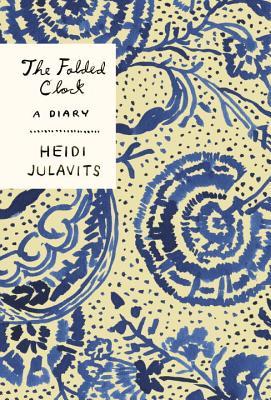
The Folded Clock and the Purpose of Memoir

A few weeks ago, I settled down to read The Folded Clock. I had seen the book around the internet a few times and it was heralded as " a meditation on time and self, youth and aging, betrayal and loyalty, friendship and romance, faith and fate, marriage and family, desire and death, gossip and secrets, art and ambition." That sounded pretty good to me, plus I've been trying to add more nonfiction to my reading life.

I found the book to be a fine read. Each entry begins with "Today I," but they jump all over the timeline instead of chronologically covering two years. I found some of Julavits' musings interesting and often funny, but I never had that desperate feeling of needing to read some more right this moment. While I appreciated her honesty as she revealed some of her innermost thoughts and regrets, I also felt at times that she was trying to be sensational and I still don't feel like I really know her in any meaningful way.

Reading this book made me think, though. I wondered why we are so eager to read biographies and memoirs. In some cases, we learn more about the lives of people we admire - politicians, philanthropists, performers, or athletes. In other instances, like this one, the subject of the book has not accomplished anything to get her on any "most influential" lists. By her own admission, she leads a mostly quiet kind of life filled with teaching, writing, and family. So what is the impetus for reading about other people's lives?

Do we have an incurable desire to snoop on other people and appreciate that reading a memoir is a socially acceptable way to do so? Do we hope to find some insight into our own lives by reading about the experiences of others? Or is it just a way to connect with humanity as a whole - to understand just a bit what it means to be this particular person?


Why do you read biographies and memoirs?

The Folded Clock: A Diary

Tuesday, April 24, 2012

Review: Patti LuPone: A Memoir

Patti LuPone: A Memoir
By Patti LuPone with Digby Diehl
Crown Archetype September 2010
316 pages
From the library


Patti LuPone is known in the theater world as one of the great leading ladies. Her unique voice and excellent acting have brought characters to life such as Evita, Mrs. Lovett in Sweeney Todd, Fantine in Les Miserables, and that infamous stage mother, Mama Rose. She is also known for being at the center of some juicy theatre drama, such as the time she yelled at an audience member to turn off their phone during Gypsy or the rumor that she was banned by Arthur Laurents himself from appearing in his work.

The writing in this memoir is not particularly memorable. It’s often choppy and seems as if Digby transcribed LuPone’s train of thought without adding any nuance or flow to the text. Ms. LuPone has a sort of carefree, almost callous tone throughout the book. She has some truly epic digs at various players in the theatre world – actors, producers, and directors alike. Then she turns around and claims that her experiences were lessons and she has adopted a “what doesn’t kill you” mentality. There is also a seeming refusal to take responsibility for anything. She got terrible reviews several times, but each time she is quick to blame the critics or the production as a whole. Her lack of honesty and vulnerability about this can be off-putting.

There are a lot of interesting stories here – Patti’s experiences in the first acting class at Julliard, a truly awful production of The Baker’s Wife, and her triumph of pure will as Eva Peron, for example. But somehow, even after so many pages, we don’t feel like we really know this woman. Sure, we know a lot more about her training, the shows she worked on, and who she loves and despises in the industry, but we don’t know her as a person. She reveals very little about her family or anything that happens in her life outside of a theater. Ms. LuPone almost appears to still be performing, even as she is pretending to reveal herself. (How very Gypsy of her…)

This memoir is not for the casual theatre patron. This is a book for someone who has seen and been blown away by Ms. LuPone’s work or for the person who loves to hear all of the backstage gossip. If you fall into one of these categories, you will love this quick, dishy read. Patti LuPone is truly one of the great actresses of the stage, but her memoir reveals only the history of her roles, not of her life.