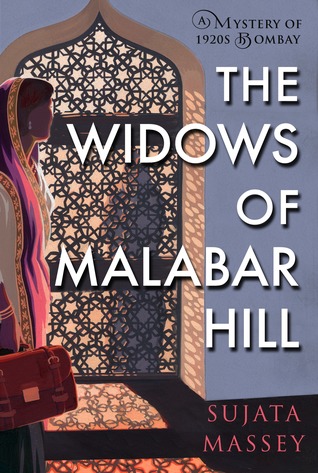
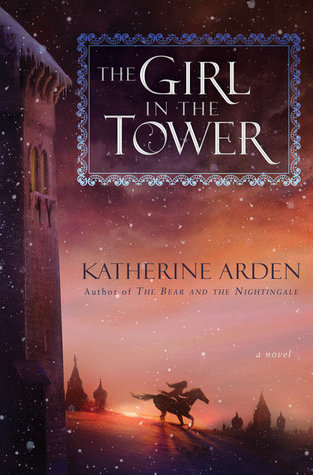
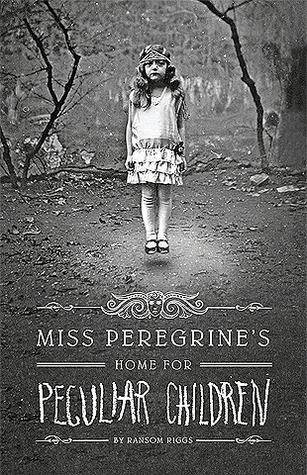
This is what my bedside table has looked like for the past few weeks.
I think I now own partial stock in Kleenex, my husband and I are familiar to all the late-night cashiers at the local pharmacies, and I have had my first chest x-ray and inhaler.
When we are in our most hectic days, having a few days to sit in bed and read sounds pretty nice. But in my experience, it doesn't really work that way. The kids are sick when you are, so there is less time spent resting in your own bed and more time spent checking temperatures and rocking them back to sleep. Instead of reading through a glorious pile of books during your sick days, it's much more likely you fall asleep in the middle of a page and then wake up to cough all over your book.
But all hope is not lost! Just because someone in your house has been sick for the last five weeks doesn't mean that you can't do any reading at all.
Here are my tried and true tricks for reading when you and everyone you know has fallen victim to the flu/cold/stomach bug.
1) Put The Nonfiction Down
I know, that giant biography looks really interesting, but you probably can't hack it. I certainly couldn't focus on the intricacies of Benjamin Dweyer's grammar guide or the ins and outs of paleontology in The Dinosaur Artist while I was hacking up a lung. Just put it aside--it will still be there when you feel better.
2) Go Short!
Sick days are the perfect time to tackle the novellas or short stories you've been meaning to read. If you have twenty minutes of attention before the cough medicine kicks in, that's a whole story down! I finally read the first of the Murderbot Diaries while I was sick this time and it was perfect.
3) Stay Familiar
Now is not the moment to start the new series you keep hearing about or finally learn about quantum physics. Sick reading is the time to stay familiar, with characters, authors, and stories you already know. This is your moment to pick up a sequel, re-read a favorite story, or let your inner fan out. Personally, I read Leia, Princess of Alderaan, which was perfect because I already knew some of the characters but I also learned more about our favorite princess/general.
Being sick is the worst. Don't beat yourself up if your reading falls by the wayside, just like the stack of mail on the table and the dishes in the sink. The books will be waiting for you when you're finally germ-free.
Showing posts with label Literary life. Show all posts
Friday, March 29, 2019
Friday, December 28, 2018
A Month of Faves: This Is How We Read and Blog
I had lofty plans for his month, specifically for A Month of Faves. I was going to read and blog prolifically. But it was December. So I have posted exactly two reviews and you can find me this weekend at home under a blanket, desperately trying to read the five books I need to finish to reach my Goodreads goal.
However, I am here right now and ready to jump into A Month of Faves with this post about reading and blogging.
As of this minute, I have read 125 books this year. I read a lot of literary fiction, although I am open to reading anything. This year, I've read romance (The Wedding Date), memoir (All the Lives We've Ever Lived, Old in Art School), short stories (What It Means When a Man Falls From the Sky, The Sadness of Beautiful Things), YA (Puddin', When Dimple Met Rishi), mysteries (Flavia de Luce, Cormoran Strike, and Perveen Mistry), graphic novels (Delilah Dirk and the Turkish Lieutenant, Giant Days), nonfiction (In the Garden of Beasts, The Displaced) and sci-fi/fantasy (The Lunar Chronicles, Every Heart a Doorway).
I read everywhere and anywhere, although I can be found reading in bed before I go to sleep every night, I often read in the rocking chair in my daughter's room while she's falling asleep after storytime, and I am quite comfy these days reading on the sofa in front of our faux fireplace. Most of the books I read are from my local library. I read some ebooks (mostly ARCs from Netgalley) and I've listened to eight audiobooks this year.
While I'm pretty happy with my reading, my blogging has not gone quite as well. Since I'm a few years into blogging. I don't feel the pull anymore to review every book I read. But I haven't reviewed nearly as many books I would have liked to review this year. Sometimes I sit down to write a review or muse about the reading life and the words seem to pour out. Other times, I schedule posts but can't seem to find the time or inspiration to actually get them done. On the plus side, I started to branch out from my own site and had my review of The Resurrection of Joan Ashby published over at Literary Mama.
In this next year, I think I would like to schedule some time into my week that is specifically for blogging/writing and see how that works. I don't think I need to read more books, but I want to continue really diverse reading, from the genres I read to the authors who write the stories. It would be nice to blog a little more regularly in 2019, but we will see how that goes!
What worked well for you with reading and blogging in 2018? What changes will you be making in the new year?
Friday, June 15, 2018
Exit, Pursued by a Bear: Can We Have Nice Things In YA?
A note before we get started: This post will have spoilers for Exit, Pursued by a Bear and discussion of rape and rape culture.
In Exit, Pursued by a Bear, protagonist Hermione Winters is drugged and raped at cheerleading camp. She doesn't remember anything, so she doesn't know who the rapist is. It's even possible he is one of the boys on her squad, someone who she sees every day and considers a friend. Throughout the story, readers witness Hermione cautiously move back into her life--she goes back to school, starts seeing a therapist, and returns to the cheerleading team.
I thought this book was great. E.K. Johnston is a really excellent writer and it is clear that she cares about her characters. Hermione gets the help that she needs as she recovers from trauma, her family and friends are supportive and caring, and by the end of the book, she can see how to keep moving forward despite the terrible thing that has happened to her.
Then I did something silly and I read some reviews of this book. I found several people who thought this book was unrealistic. They wanted to know where the public shame was and why her friends took care of her instead of abandoning her. The only person who is awful after the assault is Hermione's boyfriend, but even he eventually supports her after their cheerleading teammates confront him. To some readers, it seemed unimaginable that a girl who has been raped would have a fun night with her friends or laugh with her therapist.
I guess it all comes down to the reason that we read stories. Do we read to be reminded of how terrible the world is or do we read to imagine that we can do better? When teens read this book, I think they should believe that people will be there for them if they ever find themselves in a situation like Hermione's. I know YA is not always realistic, but I don't think there is a problem with it reflecting the best of us--the parents who support us, the friends who won't abandon us, and the community that supports us even (and maybe especially) when everything is falling apart.
Friday, April 20, 2018
In Defense of Difficult Reading: Marilynne Robinson's What Are We Doing Here
Reading something fun and light can bring us joy as readers. There are some days when we just need to sink into another world and read something that my father would refer to as "fluffy." Sometimes the security of knowing that the chef will solve the mystery while making a perfect souffle is enough to make us feel a little better about life.
But I think there's another side, too. Reading can and should be fun and entertaining but it also has the capability to make us think. It can teach us about the science and history of the world we live in. Books can compel us to ask hard questions about ourselves and the choices we make individually and collectively.
I like to read for fun, but I also enjoy being challenged. I recently read What Are We Doing Here?, which is Marilynne Robinson's newest collection. The book mostly contains speeches that she has given over the past few years. They are not easy reading--the speeches consider our history as Americans, what it means to be a person of faith in the 21st century, and the place of both humanities and science. I so appreciated that both Robinson and her publisher saw the opportunity for readers to do some hard reading and think about big questions, even if they only knew her as the author of novels.
After graduating from high school or college, there is not a requirement for most of us to continue learning. We don't have to learn a new language, or learn how to write code for our website, or read hard books. But what are we missing if we don't?
Reading doesn't have to always be complicated or always be carefree. How wonderful it is to live in a world where we can read a cozy romance with the knowledge that they will get their happy ending and then turn to a book that explains the complexities of space or physics. Readers have the unique joy and privilege of experiencing all worlds, both real and imagined, and I intend to try to read about all of them.
Friday, March 9, 2018
Spunky Historical Heroines: A Murder in Time, A Spy in the House, and The Widows of Malabar Hill
If you are a reader, you probably enjoy reading historical fiction. We can't seem to resist visiting an Elizabethan castle or imagining ourselves as the brave woman who evacuates her neighbors during a bombing in World War II era London. But reading this kind of book can be frustrating because being a woman in the past was an incredibly different experience than the one we are having in 2018. It's not quite as exciting to read about a woman who dutifully follows the direction of her parents, marries young, and has several children. We like our heroines to have some spunk and pluck, to defy expectations, and take control of their own lives.
But how far is too far in historical fiction? Do we ignore the very real consequences that women faced for defying their fathers or husbands? Do authors purposefully ignore the restrictions that women had on their everyday lives? How much leeway do we give our female protagonists when they act in ways they never could in reality?
In A Murder in Time, FBI Agent Kendra Donovan is suddenly transported back to 1815. She quickly realizes that there is a murderer at work, but has a difficult time explaining how she knows that since forensic investigation isn't used yet. Kendra appears out of nowhere and is accepted in a wealthy household as a lady's maid. She's used to being in charge, so she should get into a fair amount of trouble both as a woman and as someone who is supposed to defer to her wealthier employees. I understand that it rather breaks the narrative if she gets fired from her job for being rude or gets sent to an asylum for knowing things she shouldn't, but it does seem somewhat ridiculous for the men of the house to unanimously decide it is charming for this crazy woman to act the way she does.
Similarly, in the first book of The Agency Series by Y.S. Lee, Mary Quinn goes undercover as a lady companion in London in the 1950s. While she is a woman of the Victorian era, she also happens to be a spy collecting evidence about the family she works for and their comapny. She is rude to her employees, she sneaks out when she should be working, and she often acts like a fairly modern woman without thinking about the consequences. Mary does have two safety nets with James, who is also investigating the company, and the knowledge that the all-female agency can pull her out if things get too complicated (after all, they saved her from the gallows once). But she still ignores many of the conventions of her day and we readers don't worry too much about it because she doesn't seem to believe there is any real danger.
The Widows of Malabar Hill, a recent first book in a mystery series, seemed a bit more realistic to me. Perveen Mistry is our protagonist and she is the first female lawyer in India in 1921. Author Sujata Massey was inspired by the real-life women who practiced law around that time period. Perveen is able to solve the mystery, but this case is perhaps specially tailored to her; as a woman, she is able to gain access to the titular widows who are observing a strict period of mourning where they cannot speak to men. But we also see the ways it is difficult for her to navigate the world--she may be a lawyer, but she deals with mostly office work and research while her father argues in court. Perveen is also in situations where she has to decide if it is appropriate for her to go somewhere alone, which would never stop her fellow lawyers from talking to a client or finding answers to their cases.
So where is the line? Can our heroines act courageously with some actual consequences? Who are your favorite spunky historical heroines?
Friday, January 5, 2018
Long Books for Those Long Winter Nights
If you live in the Northeast United States like I do, you are probably digging yourself out from another snow storm. My son is enjoying his second day off from school, and we have had substantial snow at least once a week for the past three.
The good thing about cold, snowy days is the possibility of lots of reading. There's something perfect about curling up with a hot drink, a warm blanket, and a very large book. Winter is the perfect time to tackle that huge book you've been meaning to read. Here are some door stopper books I've read and a few I'm hoping to pick up this winter!
Books I've Read
Historical Fiction:
Hild by Nicola Griffith (546 pages)
Cutting for Stone by Abraham Verghese (541 pages)
The Signature of All Things by Elizabeth Gilbert (501 pages)
The Dovekeepers by Alice Hoffman (504 pages)
Mystery/Suspense:
The Fireman by Joe Hill (752 pages)
Magpie Murders by Anthony Horowitz (502 pages)
The Cormoran Strike Mysteries by Robert Gailbraith (first one is 455 pages)
Nonfiction:
Alexander Hamilton by Ron Chernow (818 pages)
Dead Wake by Erik Larson (430 pages)
Books I Hope to Read Soon
Gnomon by Nick Harkaway (704 pages)
Wolf Hall by Hilary Mantel (523 pages)
Benjamin Franklin: An American Life by Walter Issacson (590 pages)
What huge book do you think I should read this winter?
Friday, December 15, 2017
The Plight of the Too-Nice Book Reviewer
It happens more than I would like to admit.
I write a review and find myself pausing.
Am I being too mean?
I understand that the author of even the worst book spent years of their life writing and re-writing, creating and refining characters, planning and dreaming and working. There is a distinction between literary criticism and cruelty. I want to be the kind of reviewer who stays way over on one side of that line. A bad writer can improve. A good writer can and will occasionally write a dud. And can we just take a minute to mention the subjectivity of enjoying a book?
On the other hand, my job as someone who reviews books is to distinguish between good writing and bad writing, and to guide anyone who reads my reviews towards the books they should spend their precious time reading.
So I often find myself reading a snippet aloud to my husband to double check that it's insightful instead of insulting. I can point out both the good and the bad in a book without stomping on anyone's hard work. It's easy to write a zinger that is a bit funny and a bit cruel, but it's harder to point out places where the narrative could have been smoother or the characters written more vividly while also writing about the strengths of a particular book.
How about you? Do you sometimes find it hard to navigate between critical and mean?
Monday, September 18, 2017
It's Monday and I'm still here...
It's been a long few weeks, friends. I had a wonderful time with my whole family, as my cousins and sister and brother-in-law came to visit, but the world is going crazy everywhere we look. The kids hit the "we love each other, but we've been together for weeks and weeks and now everything is irritating" part of summer. I was both excited and sad to send my little one off to pre-k. We've hit a few rough patches personally and in our church. I just haven't been excited about blogging. Some days I haven't even picked up a book.
But I have read some books since I last wrote one of these posts. I read What The Family Needed, which imagines a family that is granted powers that they use to help their loved ones. I also read The Bees, a collection of poetry by Carol Ann Duffy that my sister gave me for my birthday. Last Thursday was the first day of school for my kids, so I enjoyed the quiet house by reading a book cover-to-cover. Fear not, The Girl in the Tower is just as good as The Bear and the Nightingale. It's out in December but I wanted the kind of book you can just immerse yourself in, and that fit the bill beautifully!

My first pick for Readers In Peril this year was Miss Peregrine's Home for Peculiar Children (I know, I'm the last one in the world to read this). This weekend I read Something Beautiful Happened, in which the author tries to make sense of discovering her grandmother hid a Jewish family during WWII in the wake of a relative being murdered by a neo-Nazi. I seem to be back to my two-book-a-week reading rhythm, so hopefully I can get back into blogging this week too. Fingers crossed!

Now I'm loving Robin Sloan's new book Sourdough. What are you reading?

Friday, August 18, 2017
Reading and Understanding
If you have been around here for more than a hot second, you might have read that I majored in English Literature. I can talk to you about the development of the novel or Shakespeare's impact on the English language. I could point out all the different ways to look at a piece of writing (also called lenses by pretentious English major people).
But the truth is that I still occasionally read a book and find myself befuddled. The two culprits this year (so far) are One Hundred Years of Solitude by Gabriel Garcia Marquez and City of God by E.L. Doctorow. Both authors use stream of consciousness in their books. Marquez jumps all over the history of a family with some magical realism thrown in for good measure. Doctorow tells the story of a priest who is losing his faith in the midst of long passages about science, the universe, and belief.
While reading these books, I found myself stopping and re-reading to see if I really understood what was going on. Sometimes I could figure it out; in other instances, I couldn't gain any more clarity and just kept reading anyway. I finished both books feeling glad I had read them and like I had accomplished something by sticking with a challenging book. But I also felt like I had missed out by not understanding everything that was written.
So I'm wondering if it's a deal-breaker for you if you don't understand all of a book. Do you set it aside in favor of easier reads? Do you work through it with the intention to try it again at a later point? Do you need to understand every bit of a book to enjoy it?
Friday, July 14, 2017
Getting into an Audiobook
For many of my reading years, I avoided audiobooks. What would I do when I hadn't listened for a day or two and forgot what had happened? How could I flip back through the pages to check on a specific fact? Plus, you never know exactly what will happen next and I have two young children who don't need to hear an unexpected steamy scene or four-letter word.
But this past year, I've started incorporating them into my reading. I
especially love them on long trips or when I'm cleaning up the kitchen
after putting the kids to bed. I've had the pleasure this year of
listening to Cinnamon and Gunpowder, Aristotle and Dante Discover the Secrets of the Universe, The Signature of All Things, Shadowshaper, and The Book of Unknown Americans. I
confess to picking several of the books because they were immediately
available from my library or because I adore the narrator (Lin-Manuel
Miranda or Anika Noni Rose, anyone?).
With almost every audiobook, I find myself having an adjustment period. It takes longer for me to hit my groove than it does when I read a paper book. When reading a paper book, I can tell within a few chapters if this book will work for me. With an audiobook, I've had several times where I almost set it aside and then found myself happy I stuck with it. But once I hit that point, I am sneaking in a chapter or two any time I find a few quiet moments.
Is this true for you too? Does it take you a longer time to really get invested in an audiobook?
Friday, June 16, 2017
Sisters Saving Sisters
I have three younger sisters. We had our ups and downs as kids but as adults, I am happy to report that we are good friends. Sisterhood is a unique and powerful bond, whether you have sisters by blood or friends who become your family. Some of my favorite books have stories where ladies fight for their sisters or friends.
I finally grabbed Uprooted from my library after reading many rave reviews. Agnieszka lives in a small village with her family. Every ten years, a powerful wizard comes and takes one girl to live with him and Agnieszka knows it will be her best friend Kasia. Instead, he picks Agnieszka and takes her away to live in his secluded tower. It would have been easy for the story to be divided into her early life in the village and her time with the wizard, but the bond between the two friends is an important part of the story throughout. Agnieszka and Kasia are willing to face impossible odds to save their friend and come back to help each other again and again. The two are different in personality, but both of them are brave and committed to the people they love.

Last year I read A Thousand Nights, a retelling of the story by the very talented E.K. Johnston. Our unnamed protagonist is taken by the king to be the newest in the string of wives he marries and then murders. She manages to stay alive by telling the king stories of her childhood and family, but her sisters assumes that she is dead. Grieving and enraged, she prays that her sister will be made into a smallgod. Her dedication to her sister does indeed give power to the queen, who is very much alive and will soon need every bit of strength and power she can use.
I really enjoyed these books, particularly their portrayals of the power and importance of bonds between women. So today I want all of your recommendations. What are other books where women risk everything for their sisters?
Friday, June 9, 2017
Thoughts on All Grown Up and Single Protagonists
Jami Attenberg's All Grown Up has been heralded as a much-needed addition to modern literature. The book's protagonist is a woman named Andrea who is nearing her 40s and is unmarried and without children. In the world of books, this makes her somewhat of a unique protagonist and readers are (rightly) clamoring to read more stories about women who make the choice to not marry or become mothers.
But after reading this book, I wonder if this is really the story about singleness that we want. I will never dispute that Jami Attenberg is a deeply gifted writer. I greatly enjoyed her book Saint Maisie and the writing in All Grown Up is a pleasure to read. But if we are holding up the character of Andrea as symbolic of singleness, I find myself feeling very worried and a little sad.
Andrea is a mess. The cover copy talks about the different perceptions of adulthood that everyone around her seems to hold; the problem is that Andrea seems to hold none at all. She is single not because she does not want to be in a long term relationship, but rather because she sabotages the ones she is in. She knows that she drinks too much and occasionally gives therapy a whirl, but seems to abandon it almost immediately. She hates her job, but does nothing to get a different one or even to find a hobby or activity that would give her some joy or sense or purpose.
The buzz surrounding this book hails Andrea as someone who defies social expectations by choice. That is a book I want to read. But this story seems to be rather about a woman who is stuck and doesn't know what to do. She has no idea how to make a life for herself. She clings to her own mother, while ignoring or actively shunning her best friend and brother who have recently become parents. She regularly complains about, cancels plans with, or is cruel to the people in her life and then acts shocked when they don't make time for her in their lives. Andrea worries frequently that she's not grown-up because she hasn't checked off specific boxes in life. As a reader, the only way I wanted her to grow up was to learn how to better take care of herself and the people in her life.
I wanted Andrea to be happy. I wanted her to make better choices when it came to her relationships with her family, friends, and lovers. I wanted her to find a job that didn't make her miserable and realize that she too was allowed to do things that made her feel fulfilled. Andrea used to be an artist and later in the book, she tell us why she abandoned it. I found myself wishing that someone had told her (and many other people) that loving art or music or acting doesn't mean you have to do those things professionally. There is room in life for things that just make us happy.
Let's not hold Andrea Bern up as the single protagonist we've all been waiting for. I hope instead to read about characters who are making the choice to not get married or start families who are working towards goals, achieving amazing things, and learning about themselves and the world in which they live.
Tuesday, April 25, 2017
I'm back!
I had the best intentions, friends. I was going to schedule posts for this week after I told you that I was jetting off to Scotland.
But then I didn't. I left Tuesday evening with my mom and two flights later, it was Wednesday morning in Scotland and we were off to visit my sister. She has been studying at St. Andrew's this semester and we decided we should see her and Scotland before she came home!
We visited beautiful castles, a writer's museum, and ate so much food. We met my sister's friends and saw where she had been living and taking her classes. I still did a good amount of reading; really, it's not that hard when you have a six hour flight. I finally read One Hundred Years of Solitude after it languished on my bookshelves for years (like I bought it at Borders kind of years). I also read Lilli De Jong, Keeping Place: Reflections on the Meaning of Home, and A Bridge Across the Ocean.
Now I am trying to catch up on my life and looking forward to my birthday and the 24 Hour Readathon this weekend!
Friday, March 10, 2017
Graduating to Chapter Books
As parents, we are always on the lookout for milestones with our children. We diligently record (or try to remember to record) when they took that first step or lost their first tooth. We take pictures on their first day of school, so we can remember their brave smiles the first time they climbed onto the bus all by themselves.
Some of those milestones are literary. We proudly record our little ones parroting back a favorite board book and keep the report card where their teacher extols their reading habits. And somewhere along the way, our kids go from snuggling close while you read Courderoy and Madeline to reading Percy Jackson all by themselves.
But the transition itself can be tricky. How do you take your child from picture books to chapter books? You can't jump straight from The Cat in the Hat to Harry Potter, of course. Here are some suggestions for the little reader who needs some longer books!
1. Grow with a character
If your child already has a character they know and love in picture books, check to see if you can also find them in chapter books. I know that Fancy Nancy evolved into Nancy Clancy chapter books and Cam Jansen has both easy readers and chapter books for your young sleuths.
2. Branches Books
These books from Scholastic are specifically written for kids who are between picture books and chapter books. There are several series here, and each one is illustrated and has short chapters. My toddler is currently enjoying the Missy's Super Duper Royal Deluxe series.
3. Kate DiCamillo
Hi. Huge Kate DiCamillo fans here. She seems to have a wonderful understanding of what transitioning readers want in their books and her Bink and Gollie, Mercy Watson, and Tales from Deckawoo Drive books are all in high demand around here. And they make this mom laugh, which is some serious icing on the cake if you are the one who is doing the bedtime reading.
4. Stories instead of chapters
Some of the trouble of chapter books is the sheer number of bedtimes it will take for you or your little one to read to the end. Sometimes it works best if you are reading one story at a time instead of one chapter at a time. The Winnie the Pooh books are perfect for this and you could read a mystery or two with Nate the Great before lights out.
5. Have hope
There are several series out there that are perfect for kids just starting chapter books. The trouble, of course, is finding them. We have had a lot of success with the Princess in Black books as well as Ricky Ricotta's Mighty Robots series. When in doubt, look for chapter books that have pictures or ask your neighborhood librarian!
Friday, October 28, 2016
Ten Things I Learned On Vacation
Our family of four plus my mom and sister went into NYC on a Saturday and boarded a giant cruise ship. We spent a few days at sea before arriving at a beautiful private island in the Bahamas. The next day was spent at Disney World and then we cruised back up the East Coast before arriving back in dreary, cold New York.
I know, it's not Tuesday and these points are mostly not about books (gasp!). But I wanted to share a bit about our recent trip, so here you go!
1. The wind out at sea is no joke.
2. You will find that you permanently have something in your eye when your toddler squeals with joy and runs into the arms of every character you encounter. When she waves to the princesses as they take their bows at the end of a show, you may find yourself having a sudden allergy attack.
3. Even the "too cool" big kids turn back into excited little ones when Mickey Mouse is involved.
4. If you have a boy who eats you out of house and home like I do, it may be the only time in your life that you encourage your kids to please eat more food. After all, you've already paid for it.
5. I love New Jersey beaches. But the water in the Bahamas is blue from far away and clear up close, people. You can see through to the sand and see shells and fish!
6. Formal dinner on a cruise ship seems so silly, but it's a lot of fun.
7. Cruise ship architects/designers are brilliant. There was so much room for all of our stuff in our cabin. Also, BG slept on a bed that pulled out of the sofa and D's bed came out of the ceiling!
8. Princess Leia does not like posing for pictures, even if she gets to trick or treat two whole weeks early.
9. Vacations with kids are both fun and stressful. We had so much fun with our kids, but we also really appreciated a quiet dinner with fancy food and wine for the two of us.
10. There are much worse places to read than a lounge chair on the deck of a cruise ship sailing into the Bahamas. (See? It always comes back around to reading.)
Ok, fellow Disney fans, it's time to out yourselves. Who loves Disney? Who has been on a Disney cruise?
Tuesday, September 13, 2016
Grownup Friends and Reading MWF Seeking BFF
Rachel Bertsche is newly married and living in Chicago with her husband. She is far from all of her friends and realizes that she misses having people in her life to make impromptu plans, and who she can count on when times get tough. She decides to go on 52 friend dates (one for each week of the year) and investigate every possible way to find a new friend. Bertsche gets recommendations from mutual friends in other cities, meets up with people who read articles about her experiment, enrolls in different classes, and even rents a friend.
I picked up this book because I'm feeling that I could use a few more friends in my life. My best friend since high school is across the country these days, none of my three sisters live especially close by, and I don't work in a large company where I could go out with co-workers. My husband is the pastor of our church so while I am close with many people there, thing tend to be a bit more complicated. Our neighborhood has a lot of older teachers with grown children and I have an eight year old and a two year old. I'm also an introvert, so the idea of chatting up total strangers tends to give me a bit of anxiety.
Reading MWF Seeking BFF was reassuring for me as Bertsche confirmed that I am not the only one who gets a little jealous when I read about people calling friends over for a spur of the moment visit. Making friends as an adult is much harder than it was when I was in kindergarten and asked the girl at the next cubby if she wanted to be my friend.
It also confirmed something I dread as an introvert. To make new friends, you really have to put yourself out there again and again. Some people will not want your friendship and some people won't click with you. But on occasion, the woman you chat with at the indoor playground will offer to exchange numbers (true story; this happened the other week). So I'm going to do my introvert best. I'm going to try to talk to more people. I'm going to see if taking a class or pursuing a new interest will lead to some new friends in my life.
Bertsche has a very easy conversational writing style and I think she hits a great balance between her own experiences and sharing some research about the benefits of friendship. However, there is a point about halfway through the book when she has met a lot of new people and is finding that her schedule is almost insanely full. For the second half, it feels much more like a stunt memoir where the author has to go on a certain number of outings with potential new friends, even though she has no more time or attention to give them.
Making friends as an adult is difficult. Free time is precious and it's hard to know who is interested in starting up a new relationship. Reading a book like MWF Seeking BFF can certainly give us all some ideas for making new friends and encourage us that we are not alone in needing a friend or two.
MWF Seeking BFF: My Yearlong Search For A New Best Friend
By Rachel Bertsche
Ballantine Books December 2011
349 pages
From the library
Thursday, August 11, 2016
Books for the Theatre Nerd
In college, I was a double major in English Literature and Theatre Arts. I am that theatre nerd you remember from high school who starred in all the shows and was president of the drama club. There was one glorious summer that I spent at the New Jersey Performing Arts Center taking singing, acting, and dance classes. So I am beyond happy when I can combine my two loves and spend hours reading about the people who write and perform on Broadway and the journey that stories take from page to stage.
Many musicals you know and love draw direct inspiration from books. Lin-Manuel Miranda had the idea that would eventually become the musical Hamilton when he read the biography by Ron Chernow. Long-running musicals Les Miserables and The Phantom of the Opera are based on the classic novels of the same name. Even children's books can be the impetus for a musical, as we saw with Matilda and this year's Tuck Everlasting.
But maybe you don't want to read the inspiration for your favorite show. Maybe you have a performer you adore and you painstakingly save up to see them every time they appear onstage. Fear not. Many Broadway babies have written memoirs. Kristin Chenoweth wrote about her beloved voice teacher, being adopted and, of course, starring as Glinda in Wicked. Alan Cumming and Patti LuPone have written about their lives onstage and off. Neil Patrick Harris used a choose your own adventure format for his book. You can even get inside the brain of composer Stephen Sondheim in his book Finishing the Hat and its sequel.

Then again, maybe you are thinking bigger. Maybe you want to know about musical theatre in general. Whose crazy idea was it to break into song in the middle of a play? You can check out The American Musical Theater. Are you curious about the effect that theatre has on kids? Drama High is the book for you. Maybe you eat up stories of young actors moving to NYC with just a suitcase and a dream. Then you need to read Making It On Broadway.

So there you have it, belters and tap dancers. Those are some of my favorite books about the magic of theatre and the people who make it happen. What books do you recommend?
Many musicals you know and love draw direct inspiration from books. Lin-Manuel Miranda had the idea that would eventually become the musical Hamilton when he read the biography by Ron Chernow. Long-running musicals Les Miserables and The Phantom of the Opera are based on the classic novels of the same name. Even children's books can be the impetus for a musical, as we saw with Matilda and this year's Tuck Everlasting.


Then again, maybe you are thinking bigger. Maybe you want to know about musical theatre in general. Whose crazy idea was it to break into song in the middle of a play? You can check out The American Musical Theater. Are you curious about the effect that theatre has on kids? Drama High is the book for you. Maybe you eat up stories of young actors moving to NYC with just a suitcase and a dream. Then you need to read Making It On Broadway.

So there you have it, belters and tap dancers. Those are some of my favorite books about the magic of theatre and the people who make it happen. What books do you recommend?
Subscribe to:
Posts (Atom)