Tuesday, July 16, 2013

Review: The Betrayal

The Betrayal
By Helen Dunmore
Grove Press 2011
327 pages
From the library

The Betrayal

Andrei and Anna have survived the terrible siege of Leningrad. They have lived through a war that seemed as if it would never end and barely fought off the starvation and frozen temperatures that accompanied it. They are looking forward to some semblance of peace, perhaps an echo of the normal lives they lived before the war. But they are still living in dangerous times. At the hospital where Andrei works, a young boy is brought in for treatment. The doctors fear it is a tumor but no one is willing to tell the boy's father, who is a high-ranking military official. When the boy and his father take a special interest in Andrei, does this guarantee the tiny family some security...or has Andrei introduced them to a whole new kind of danger? 

I was eager to read this book because it is set in a different time and place than most of the historical fiction I read. While I find myself picking up many books set during WWII in England or Germany, I have not read many novels set in Russia and I can't recall any that were set during this period after the war. While The Betrayal is technically a sequel to the novel The Siege, you can read this book by itself without confusion.

Dunmore excels at depicting the paranoia and fear that order every decision these characters make. Anna takes on more work at the nursery school because to refuse would be to draw unwanted attention. Andrei agonizes over taking this case and then worries over every interaction he has with his young patient and his powerful father. Anna fears that her brother Kolya playing the piano will make the neighbors angry enough to file false reports. Thinking about the possible repercussions of each and every decision creates a heavy burden that each character carries throughout the novel. 

After everything they have been through, Andrei and Anna take very different positions about the way they should live their lives. Andrei still believes in the good of people and in doing the right thing. Anna is suspicious of everyone and everything, still not convinced that they have achieved any real security. This leads to a lot of tension in the little family, but it also makes the few moments of true peace and joy that much more poignant.

The Betrayal is a great book. Ms. Dunmore has done so much more than create compelling characters and an engaging story. As you read, you can almost feel the chill of a Russian winter and the weight of paranoia that constantly accompanies Anna and Andrei. 

Monday, July 15, 2013

It's Monday and it's been a long week...

Hi friends. How are you?
I think the best word to sum up how I'm feeling right now is weary. It's been one of those weeks where you just feel in constant motion.When you add that to everything that has been going on in the news this week, I feel like pulling the family in close and making this Monday slow and quiet (as much as is possible with two kids, anyhow).

Read This Week:
A Guide to Being Born: Stories
A Guide To Being Born
By Ramona Ausubel

The Other Typist
The Other Typist
By Suzanne Rindell

Posts from this Past Week:
It's Monday
Reviews of Loving The Little Years: Motherhood in the Trenches and                                         The New York Trilogy

Reading Now:
Started Early, Took My Dog
Started Early, Took My Dog (Jackson Brodie #4)
By Kate Atkinson

Up Next:
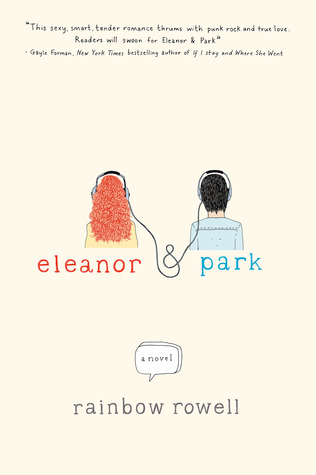
Eleanor & Park
Eleanor and Park
By Rainbow Rowell


What are you reading this week?

Thursday, July 11, 2013

Review: The New York Trilogy

The New York Trilogy
By Paul Auster
Penguin 2006
308 pages
From my shelves

The New York Trilogy

The New York Trilogy is a collection of three novellas, each a detective story in its own right. In City of Glass, a man named Quinn gets a phone call. The caller is searching for a private detective named Paul Auster. Quinn, however, is a mystery writer. After many insistent phone calls, Quinn says that he is Auster and is hired to protect a young man whose life may be in danger. Ghosts tells the story of a detective named Blue. He is hired by a man named White to watch a man named Black. Blue settles into an apartment across the street from Black and takes note of his every move....which seems to mostly consist of staring out of his window and writing. In the final novella, The Locked Room, a writer  is contacted because his childhood friend Fanshawe has disappeared. Fanshawe has made him the executor of an amazing collection of work. He is to decide if it is worthwhile and if so, have it published. In the meantime, our narrator manages to find a place in Fanshawe's family. But the question of what happened to his friend is one that consumes his thoughts and refuses to allow him any happiness. 

Auster is a complicated writer, but his work can be read at multiple levels. A reader could enjoy the stories in The New York Trilogy simply for their twists and turns and meticulous noir style. But these are much more complicated than detective stories. I feel as if I could read them again and again and find new connections each time. Of course, calling them detective stories is much too simplistic. These stories feature excellent writing and an ongoing exploration of the ways that books and the act of writing can impact our lives. Classic books like Walden and Don Quixote play pivotal parts. Quinn, Blue, and our unnamed writer are all constantly writing in an attempt to make sense of their situations. 

The title of this trilogy comes from the setting. Each story is set in New York City and Auster brings NYC to life with ease. As his characters walk down the streets and visit its establishments, you feel like you are walking with them regardless of how many times you have actually been there. The city becomes a character itself, always present and always observing the action of the stories.

My favorite part of these stories was Auster's Hitchcock-like decision to place himself within the stories. Or perhaps a version of himself? Although I won't attempt to reason out why he does this exactly, I found it great fun to compare Auster the character(s) with Auster the author and find the places where they diverge. 

The New York Trilogy is something akin to a giant puzzle for your brain. You won't figure it all out, or at least I know I didn't. Somehow this isn't a disappointment. Instead, it's an invitation to read and re-read. Going for the ride is a fascinating experience all by itself. 

Tuesday, July 9, 2013

Review: Loving the Little Years

Loving the Little Years: Motherhood in the Trenches
By Rachel Jankovic
Canon Press 2010
102 pages
From a friend 


Loving the Little Years: Motherhood in the Trenches


Parenting books are so hit and miss. Parenting is a universal experience because it is both incredibly difficult and amazingly rewarding. But so many of the particulars depend on your and your children and your unique personalities and circumstances. There were some things I really appreciated about Loving the Little Years and then there were some parts I could have done without.

The first thing to know is that this is the perfect read for the parent who only finds a few minutes to read in between diaper changes and refereeing disputes over Legos. The book is divided into short sections. Each section is just a few pages. Jankovic looks at topics like teaching our children to manage their emotions, watching the way we speak around our children, and viewing your children as individuals instead of a collective circus. From the first pages, you know that she is going to be a writer you can relate to - she opens the book by writing, "I didn't write this book because mothering little ones is easy for me. I wrote it because it isn't. I know that this is a hard job, because I am right here in the middle of it."

The short sections have their merits, but they unfortunately leave the sections feeling unconnected to each other. Some of the sections themselves feel like unfinished thoughts. Ultimately, I felt as if Jankovic could have benefited greatly from a strong editor to pull her ideas together in a more polished and cohesive manner.

I did take away some good advice, though. The best thing I gleaned from this slim book is something that I need to remind myself of just about every day. Jankovic reminds us that we are often focused on just this day and the ways in which our child is disobeying or falling short of what we would like them to do. It's so easy to forget that the thing we are repeating a million times a day ("Please turn out the light when you are done in the bathroom! Why are your socks on the floor? You can't leave your toys on the stairs.) are not the same things we were repeating two weeks or three months ago. It's easy for us to forget the progress that our children have made when we focus on the current issues.

Loving the Little Years is a good choice for the harried parent to read, a little bit at a time. While you may not agree with or be able to use every piece of advice, it's always nice to have a reminder that you are not alone in the craziness of parenthood. 

Sunday, July 7, 2013

It's Monday and I have this baby sleeping on me....


Hello there. I'm writing from my couch where my almost two month old (!) has decided that I am the only sort of surface that will do for her current nap. This baby does give a very nice cuddle, so I'm going to go with it.

How was your week? I'm feeling good about reading right now. I read two books in a week after only getting through one last week and I really enjoyed both of them. Hooray!

Read This Week:
The Interestings
The Interestings
By Meg Wolitzer

The Immortal Life of Henrietta Lacks
By Rebecca Skloot

Posts from this Past Week:
It's Monday
June Wrap Up
Review of Personal Days

Reading Now:
A Guide to Being Born: Stories
A Guide To Being Born
By Ramona Ausubel

Up Next:
The Other Typist
The Other Typist
By Suzanne Rindell

What are you reading this week?

Thursday, July 4, 2013

Review: Personal Days

Personal Days
By Ed Park
Random House 2008
241 pages
From the library
PEN/Hemingway #4

Personal Days

The workers in an anonymous New York City office fear for their jobs. One by one, it seems like they are being fired for reasons no one can quite verbalize. Do they stay employed by working extra hours? Or does that draw unwanted attention? Should they blend in with their co-workers or will they fire anyone who is not outstanding? But maybe none of them care all that much about keeping this boring job where they aren't even sure who is in charge. Is it the ridiculous Russell, who they all refer to as The Sprout? The alluring and mysterious Maxine? Or perhaps a shadowy board all the way out in California? In Personal Days, Pru, Jonah, Jack, Laars, and their co-workers try to find the answers to these questions through emails and covert meetings during cigarette breaks...all without losing their minds.

Personal Days is a funny read. Parks understands many of the absurdities of a modern workplace - the mind numbing day to day work, the desperate scramble to keep your job even if you don't love it, and the ever rotating upper management, unknown to the people whose jobs and lives they impact. The book is somewhat experimental. It has three very different sections. The first is told with a straightforward narrative. The second section is told as a sort of outline gone wild, with long digressions under Roman numerals. The last section is a rambling run-on sentence of an email from one co-worker to another.

The problem with this book, ultimately, is that the humor is a little less funny with every page. While the wry observations might cause you to chuckle on page 15, you simply nod in recognition by page 100. There is a sense of mystery and paranoia that hangs over the pages. The employees are desperate to make some sort of sense of their jobs and the place where they work. They become amateur sleuths, puzzling over who was fired and why, and dissecting every word from the management. But the sense of intrigue is not enough to hold the reader's attention and when the secrets are all revealed, it seems somewhat predictable.

Personal Days is a quick read and it certainly exhibits the dry observational wit of its author. The strange culture of a shared work space is smartly dissected, but it is just too long. Perhaps this book would have worked best as a short story or novella that would show off Park's talent without leaving the reader wishing for a shorter book. 

Tuesday, July 2, 2013

June Wrap-up

Goodbye June! Thanks for the sunshine and the maternity leave. But please take the intense heat with you when you go. Reading was pretty good this month and hopefully it won't slow down any time soon! 

Books reviewed in June: 8
Pages Read: 2,921
Fiction/Non-fiction: 5/3
Female authors/male authors: 3/5
My books/library books: 5/3
Lindsey's favorite book in June: Tiny Beautiful Things 


Books reviewed with David: 2
David's favorite book in June: Friends Forever 


What was your favorite book in June?


We hope your summer is off to a great start. David is definitely having a blast!